
• Miami16:34
  • ·Athens23:34
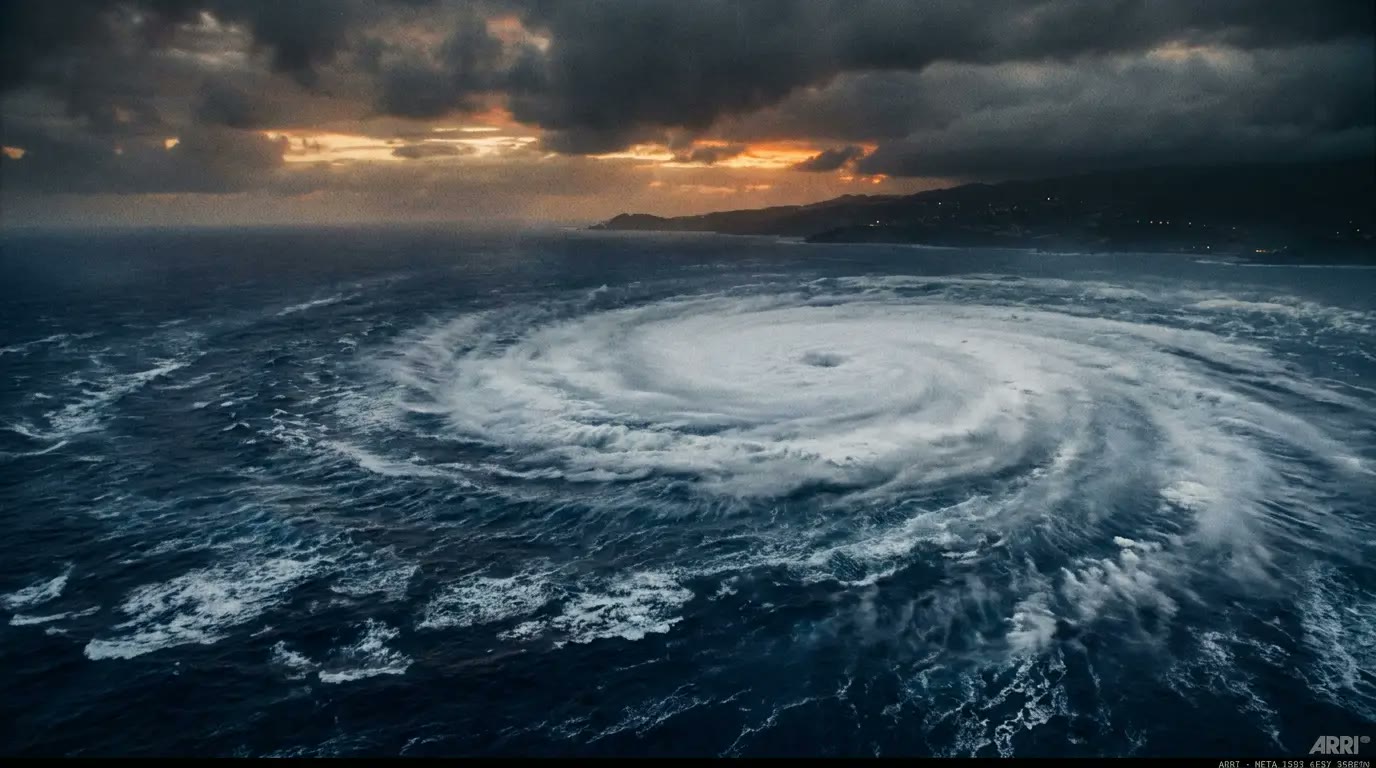
Category 5 hurricane approaching coastline at dusk
SRMG

Catastrophic Risk

The programme you hope you never test.

A Category 5 crosses the Caribbean cruising season. A cyber incident cascades through a port operator's throughput systems. A refined-product tanker breaks up in a marine sanctuary. A shipyard fire takes out three vessels at once. These aren't hypothetical scenarios — they're the events that have already ended businesses that thought they were covered. Catastrophic risk is where standard insurance meets its limits, where a poorly structured programme costs more than no programme at all, and where the difference between a nine-figure loss and a bounded exposure is the wording someone put together three years earlier at renewal.

$0.0B+
In catastrophe-layer capacity placed
0-hour
Claims mobilisation guaranteed
0
Named events responded to since 2020
THE EVENTS

Where catastrophic loss actually happens.

Catastrophic risk isn't one thing — it's five distinct event classes, each with its own loss dynamics, its own recovery timeline, and its own wording requirements. Structure the programme without recognising the differences, and you'll discover them at claim time.

01

Named-Storm Events (Hurricanes, Cyclones, Typhoons)

Category 4 and 5 storms crossing operational geography. Total vessel loss, storm-surge marina destruction, port throughput shutdowns, fleet displacement. Florida, Gulf Coast, Caribbean, Southeast Asia — and increasingly the Mediterranean.

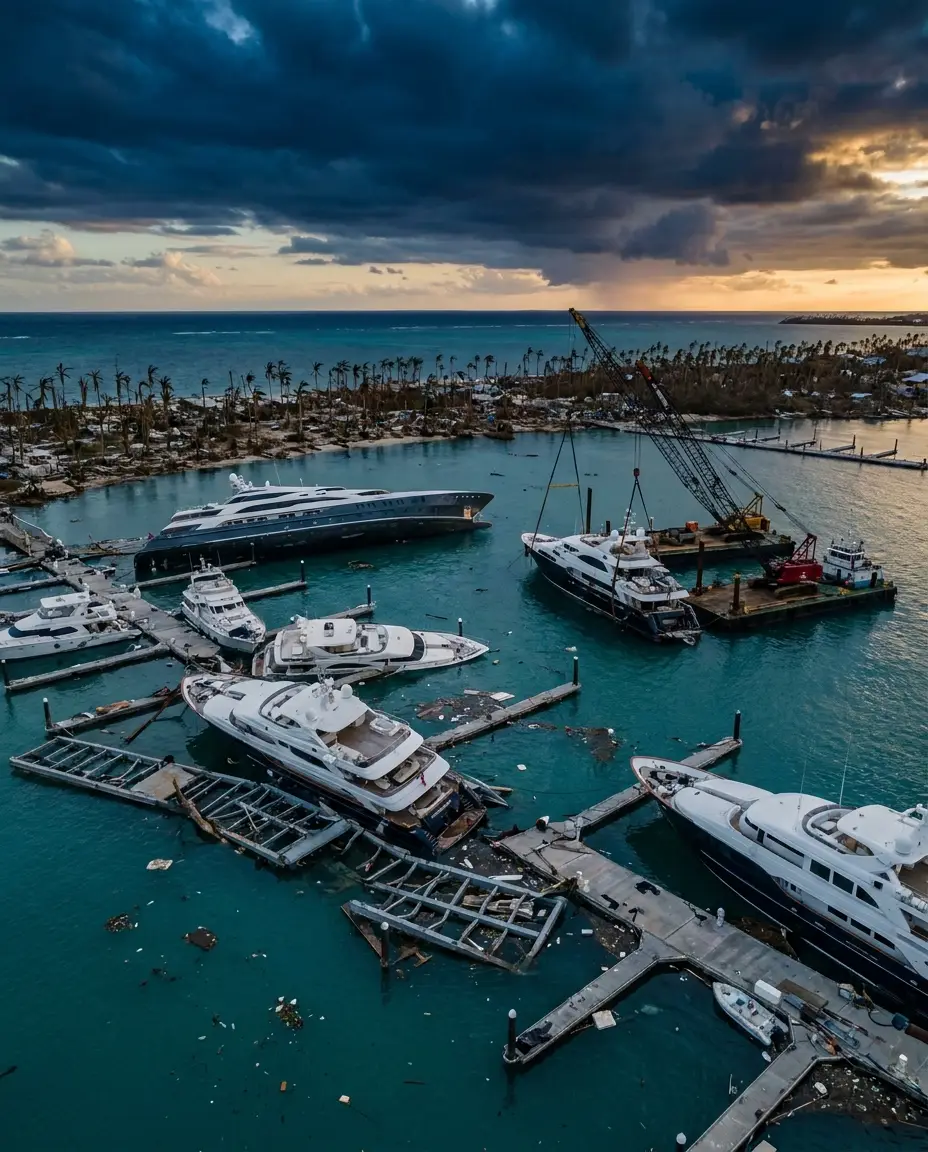
Recent response: 2024 Atlantic season, Category 4 event impacted a fleet of 8 insured yachts across three marinas. Parametric layer released $9M within 48 hours. Follow-on hull losses settled progressively as damage was surveyed.
02

Port Explosions & Facility Fires

Sudden catastrophic failure at a marine terminal, refinery, or bulk storage facility. Infrastructure loss, cargo total, third-party liability across neighbouring operations, and consequential business interruption stretching quarters — not weeks.

Reference event: Beirut 2020 loss profile. Our terminal clients now carry structured aggregate cover explicitly benchmarked against that scenario, with defined attachment points above operational property limits.

03

Cyber Cascade Events

Ransomware or GPS spoofing that disables a fleet or port operation simultaneously. Physical asset failure without a physical trigger — vessels and terminals offline at once, revenue frozen, liability accumulating in real time.

Reference event: 2017 NotPetya loss profile that took Maersk offline for weeks. Our cyber cascade cover is structured against that class of aggregate systemic event, with BI attaching at day one of operational downtime.

04

Marine Pollution Catastrophes

Tanker break-ups, industrial cargo release, subsea pipeline rupture. Multi-jurisdictional environmental liability, remediation running years, statutory fines running nine figures, reputational consequences running longer.

Reference event: Exxon Valdez and Deepwater Horizon loss profiles. Our pollution programmes carry long-tail liability structuring and pre-agreed environmental counsel across the major jurisdictions where our clients operate.

05

Seismic Events (Earthquakes & Tsunamis)

US West Coast, Japan, Pacific Islands, Chile. Sudden asset loss, port infrastructure destruction, and the supply-chain cascade that follows for the industries dependent on the destroyed corridor.

Reference event: 2011 Tōhoku loss profile impacting Japanese ports for months. Our Pacific clients carry parametric seismic layers indexed against USGS magnitude thresholds at specified fault distances.

THE NEW MAP

Where catastrophic risk actually sits in 2026.

Insurance geography lags reality. Underwriters priced the Mediterranean as a "low-risk cruising ground" long after the first Category 4 storms started hitting Sardinia and Corsica. They're still pricing the North Sea for the storms of 2015, not 2025. Your programme needs to reflect where risk is going — not where it used to be.

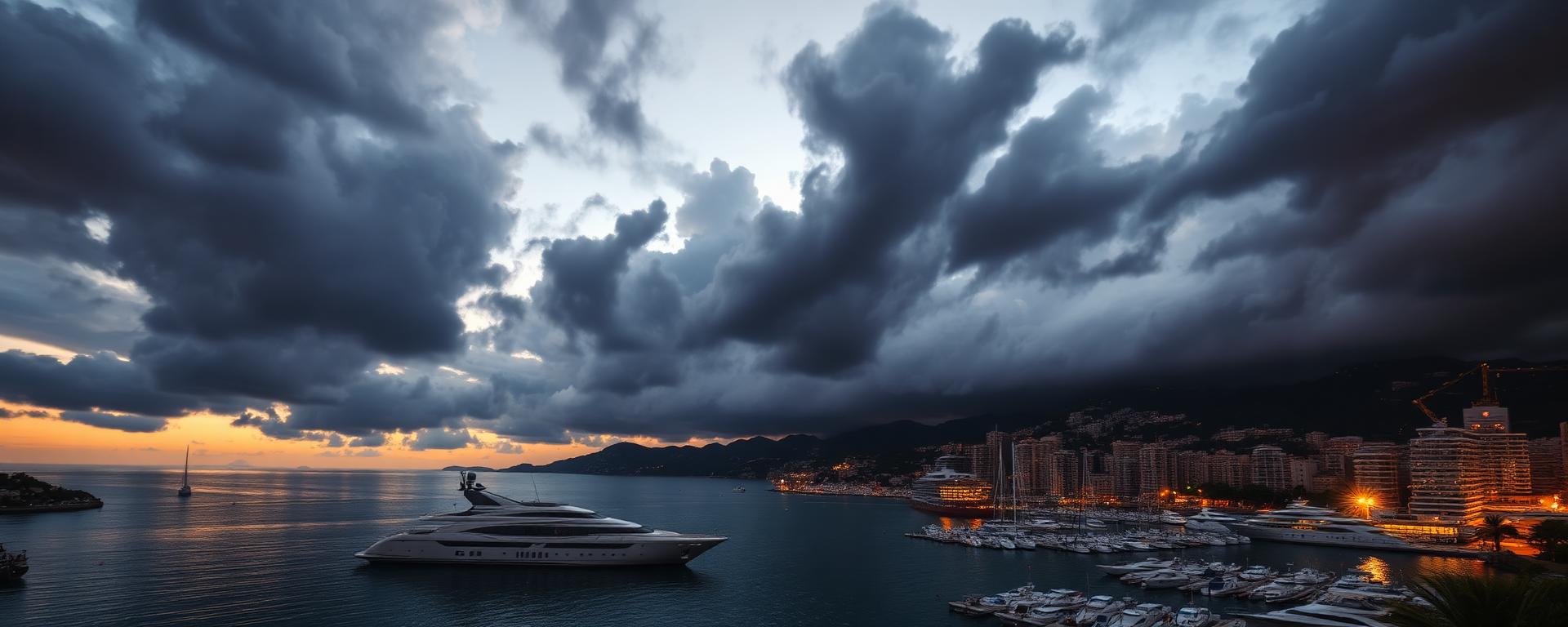
Storm system approaching Monaco harbour at dusk
01

Mediterranean Escalation

Marine heatwaves, sudden storm systems, and off-season named events increasingly hitting yachting hubs from Monaco to Bodrum. What was structured as summer cruising cover now requires hurricane-style parametric layers.

02

Northern European Windstorms

Rising storm intensity and coastal flooding disrupting offshore energy, cargo throughput, and port operations across the North Sea. Programmes written for Atlantic-only exposure miss the shifting risk profile entirely.

03

Asia-Pacific Intensification

Cyclones and typhoons increasing in strength and frequency, threatening shipyards, offshore contractors, and container terminals from Manila to Singapore to Northern Australia.

04

Global Cyber Exposure

A cyber event has no geography. A single ransomware campaign can immobilise fleets, ports, and terminal management systems anywhere in the world simultaneously — including the ones you thought were "not exposed to that."

THE RESPONSE

What happens in the first 72 hours.

Catastrophic events aren't won at renewal. They're won in the first three days after the wire trips. A standard programme takes a week to mobilise an adjuster. Ours has your parametric layer paid before an adjuster leaves the office.

  1. HOUR 0

    Event hits

    Wire trips against pre-agreed event trigger.

    Our monitoring desk logs the event against every client's coverage geography. Named clients notified inside minutes; response protocols activated automatically.
  2. HOUR 6

    Parametric trigger releases initial payment

    Capital in the client's hands against index data.

    Wind-speed data from NOAA or JMA stations, or quake magnitude from USGS, is validated against pre-agreed thresholds. First tranche of parametric capital released within six hours.
  3. HOUR 12

    In-house team coordinating with surveyors

    Response unit mobilising the vendor network.

    Our claims team convenes with pre-agreed surveyors, salvage contractors, and admiralty counsel across the affected geography. Nothing waits on carrier authorisation.
  4. HOUR 24

    Salvage / environmental response deployed

    Physical response teams on scene.

    Pre-contracted salvage tugs and environmental response teams — staged before the season — begin physical response inside 24 hours of event. No procurement delay.
  5. HOUR 48

    Adjusters on site coordinated

    Lloyd's-appointed adjusters actively surveying loss.

    Adjusters appointed by Lloyd's syndicates arrive on scene alongside our claims lead. Damage quantification begins immediately against pre-agreed protocols.
  6. HOUR 72

    Full claims mobilisation operational

    Every workstream — legal, environmental, hull, BI — in motion.

    By hour 72, every claim workstream is running in parallel: hull and machinery, business interruption, third-party liability, environmental, and any statutory notifications.
  7. 72+

    Ongoing recovery

    Progressive settlement across the programme.

    Hull losses settle progressively as survey completes. Business-interruption indemnity flows against agreed monthly benchmarks. Long-tail liability continues under retained counsel.
STABILIZED
THE ARCHITECTURE

Programmes designed for the events that don't fit any standard wording.

Standard cover fails at catastrophic scale for three specific reasons: sublimits designed for normal-year losses, exclusions written before the event class existed, and adjuster response cycles measured in months when your recovery needs to start in days. We structure programmes that solve each of those directly — high-layer excess-of-loss architecture, parametric triggers that release payment against event data rather than adjuster inspection, and pre-mobilised response networks that are already moving the moment your event hits the wire.

01

Excess-of-Loss Catastrophe Programmes

High-layer cover designed to attach above your working programme, structured against your specific aggregate exposure. Storm, seismic, pollution, cyber — protected at the layer where a bad year turns into a business-ending year.

Layer attachment structured against your operational aggregate — not the market's assumed retention. Ceded capacity placed through Lloyd's catastrophe syndicates and specialty reinsurers.

02

Parametric Triggers

Pre-defined payouts tied to measurable event data: wind speed at a specified station, quake magnitude at a specified fault, cyber event indexed against downtime hours. Cash in the client's hand before adjusters arrive.

Wind-speed triggers indexed against NOAA and JMA station data. Seismic triggers against USGS magnitude thresholds at named fault proximities. Cyber triggers against Marsh Cyber Index event classifications.

03

Contingency Response Frameworks

Pre-agreed protocols for yacht fleets, marine contractors, and port operators. Salvage tugs on standby contracts. Emergency response teams pre-positioned before the season. Legal counsel retained before the incident.

Recent activation: 2024 Atlantic season. Our Caribbean clients had pre-agreed salvage contracts, environmental response teams staged in Miami, and admiralty counsel retained across all major flag jurisdictions before the season opened.

04

Scenario Modelling & Stress Testing

Financial exposure modelling for named catastrophe events specific to your operation. Business interruption impact, liability cascade analysis, coverage gap identification. The numbers that make board-level insurance conversations coherent.

Stress-test outputs delivered as a board-ready package — worst-case financial exposure, layer arithmetic, capacity utilisation, and coverage gap analysis. The document your CFO takes to the risk committee.

05

Claims Mobilisation Protocols

When the event hits, our in-house response unit coordinates surveyors, salvage teams, marine attorneys, environmental consultants, and underwriters simultaneously — inside 24 hours. We've built the playbook. We've run it. It works.

Pre-agreed vendor networks in every major maritime region — Miami, Rotterdam, Singapore, Athens, Dubai. When the event hits, the response is already in motion before the first ship-to-shore call reaches your desk.

THE DIFFERENCE

Standard cover versus a programme built for the event.

A working commercial programme

  • Sublimits designed for normal-year losses
  • Exclusions written before the event class existed
  • Adjuster response cycles measured in months
  • No parametric layer — everything waits for inspection
  • Vendor coordination begins after the incident

SRMG catastrophic programme

  • High-layer aggregate structured against your worst-case exposure
  • Wording updated against emerging event classes annually
  • Claims mobilisation guaranteed inside 24 hours
  • Parametric layer releases capital before adjusters arrive
  • Vendors pre-agreed and pre-positioned before your season
CASE STUDY
Marine salvage operation in progress at sea

Category 4. Eight yachts. Nine-day recovery window.

When a Category 4 hurricane crossed the Caribbean cruising season in September 2024, one of our fleet clients had eight insured yachts spread across three marinas in the storm cone. Under a working programme, adjuster access would have taken two weeks and quantification would have taken months. Insurance receivables would have hit the balance sheet in Q1 2025.

Instead, our parametric layer triggered against wind-speed data recorded at three named NOAA stations. $9M was released within 48 hours, with the client controlling the deployment. Pre-agreed salvage contractors were on-site inside 72 hours. Hull losses were surveyed progressively over the following weeks and settled without dispute against the primary programme.

  • Parametric layer released $9M against NOAA wind-speed indices — no adjuster involvement
  • Pre-agreed salvage response mobilised inside 72 hours
  • Follow-on hull losses settled progressively without carrier dispute
  • Fleet operational recovery achieved inside nine working days

Result: The client's Q4 revenue guidance was preserved. No coverage arguments across the primary or the catastrophe layer. Two of the eight yachts back in charter service before hurricane season ended.

CARIBBEAN FLEET OPERATOR · 8-YACHT PORTFOLIO · SEPTEMBER 2024
We got the wind-speed readout at six in the morning. The parametric funds had cleared by eight. My operations director went into the salvage staging call thirty minutes later with actual cash on the table. That's not insurance. That's operational infrastructure.
HEAD OF FLEET · CARIBBEAN CHARTER GROUP · 🇰🇾
WHY SRMG

Why boards approve SRMG catastrophe placements

  • Programme architecture designed specifically for catastrophic exposure — engineered, not scaled up from working-programme wordings
  • Parametric structuring capability, including proprietary wind-speed and quake-magnitude indexing methodologies
  • Board-level scenario modelling and stress-testing built into every placement
  • 24-hour claims mobilisation with pre-agreed vendor networks in every major maritime region
  • Independent since 1990. Every renewal, we go back to market. Every time.

Test the programme before the event does.

Complimentary catastrophic exposure review — layer analysis, parametric structuring options, stress-test modelling for your specific operational geography. Board-ready deliverables. No obligation.

Frequently asked

Catastrophic risk questions

Parametric marine insurance pays a pre-agreed amount when a defined trigger occurs (a Category 4 hurricane within X km of the insured vessel, for example) without requiring traditional loss adjustment. SRMG structured a parametric programme for a Caribbean charter fleet that paid within eight hours of the hurricane wind-speed trigger — funds were on the salvage staging call before the first insurer's adjuster had physically reached the site.